Stepping back from day-to-day responsibilities at Coding it Forward

This post was originally published on the Coding it Forward blog, with the subtitle "Transitioning leadership and a reflection on the past four years."
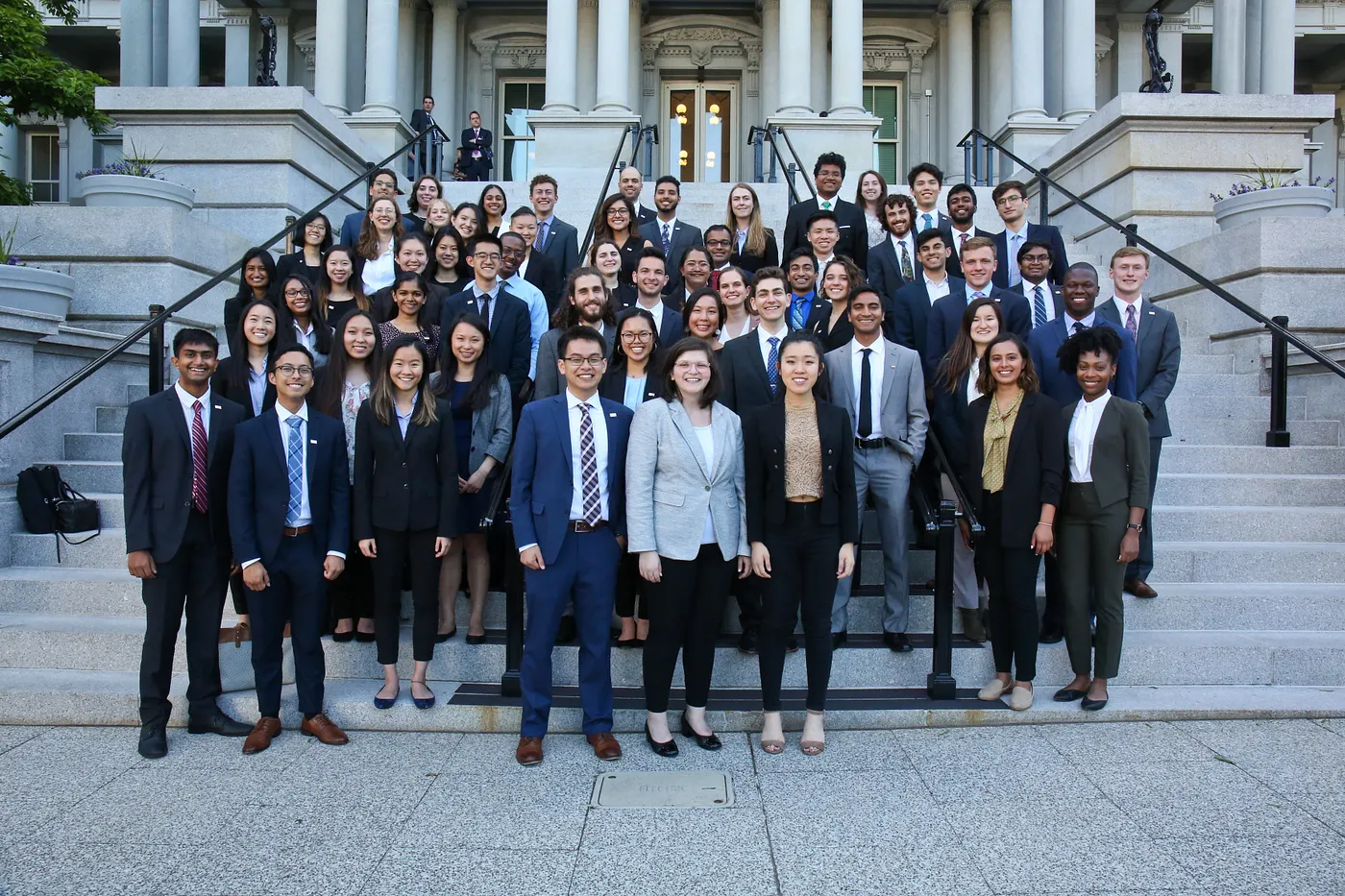
Today, I am sharing publicly what I have been sharing with Coding it Forward’s partners, collaborators, and community in recent days and weeks—that I will be stepping down from my day-to-day responsibilities at Coding it Forward at the end of this week.
Co-founding and helping lead Coding Forward while engaging with so many passionate students and young people from across the country — and around the world — has been an incredible privilege and opportunity, which why this transition is especially bittersweet.
I am stepping back with great confidence that Coding it Forward will continue serving its important mission under Rachel Dodell and Ariana Soto’s passionate and expert leadership. I have been extremely fortunate to work and learn beside them these past few years — both in person and virtually — and I am certain that the work we’ve started and the seeds we’ve planted will only continue to blossom under their direction. As we go through this transition, I have every intention to stay engaged with Coding it Forward and to champion its overarching mission of inspiring and empowering young people to create impact with their tech, data, and design skills.
While the time will come for me to share more about my next steps, I hope to take this opportunity to look back on our work over these past four years and what it has meant to me.
We started Coding it Forward in January 2017 when we were students looking for impactful tech opportunities and we couldn’t find anything except unpaid Microsoft SharePoint internships in government. After speaking to many friends and classmates who felt similarly stuck, we realized that young people—including ourselves—faced significant barriers to entry into social impact tech, including peer pressure, a lack of awareness of existing opportunities, and few role models of individuals doing the work.
 Athena Kan
Wanting to simultaneously tackle the peer pressure and awareness elements, we brought together a community of like-minded peers and shared what few opportunities existed at the time over a mailing list and Medium blog that highlighted individual stories of technologists creating impact with their skills, including features of social impact startup FreeWill and the Design Gigs for Good job board.
These early spaces allowed us to challenge the narrative that was all too common on college campuses—that the only tech roles for students and young people were in “big tech” and startups—by raising awareness of mission-driven roles and organizations. Much of our first exposure to the field we later came to understand as “civic tech” came from Nick Sinai’s Harvard Kennedy School field course, Technology and Innovation in Government, where we first met people like Erie Meyer and her colleagues at the U.S. Digital Service.
Despite making promising progress in raising awareness of social impact technology and breaking down stigma by celebrating technologists doing mission-driven work through our blog and mailing list, we were still held back by a lack of tangible opportunities for young people like ourselves.
So, we set out to create our own.
Fundamentally, the Civic Digital Fellowship emerged in April 2017 because we were looking for internships for ourselves. But after several early conversations with Jeff Meisel, a former Presidential Innovation Fellow and the then-Chief Marketing Officer of the U.S. Census Bureau, we realized there was a much larger opportunity to not only open the door to civic tech for ourselves, but also for many more students with similar interests and skillsets.
There wasn’t any precedent for the internship program we were hoping to launch in government, so we set out to design a program “for Fellows, by Fellows” that we ourselves would have wanted to join. We treated the summer as a beta—having gone from an idea to Fellows starting at the Census Bureau in less than three months—but quickly realized we had hit on a model that was attractive to top talent: merging high-impact work, professional development, and mentorship in civic tech with a cohort-based community of peers.
The Civic Digital Fellowship grew quickly from our inaugural 2017 cohort of 14 Fellows, and to date, Coding it Forward has placed over 200 Fellows at 11 federal agencies.
Federal agencies including the Departments of Health and Human Services, Veterans Affairs, and State have all seen first-hand the value add that Civic Digital Fellows bring to their mission, and collectively, Fellows’ work has saved their host agencies upwards of $5-10 million in taxpayer money, cut years off of key production timelines, and delivered high-quality products and services for federal employees and the American public.
The Fellowship’s impact does not stop after the 10 weeks of the program, either; it meaningfully affects the career trajectories of those who participate, including many who stay in government or later return. Over 54% of former Fellows have found jobs in public interest fields, in government at all levels, nonprofits, civic tech companies, and news media.
 Tajha Chappellet-Lanier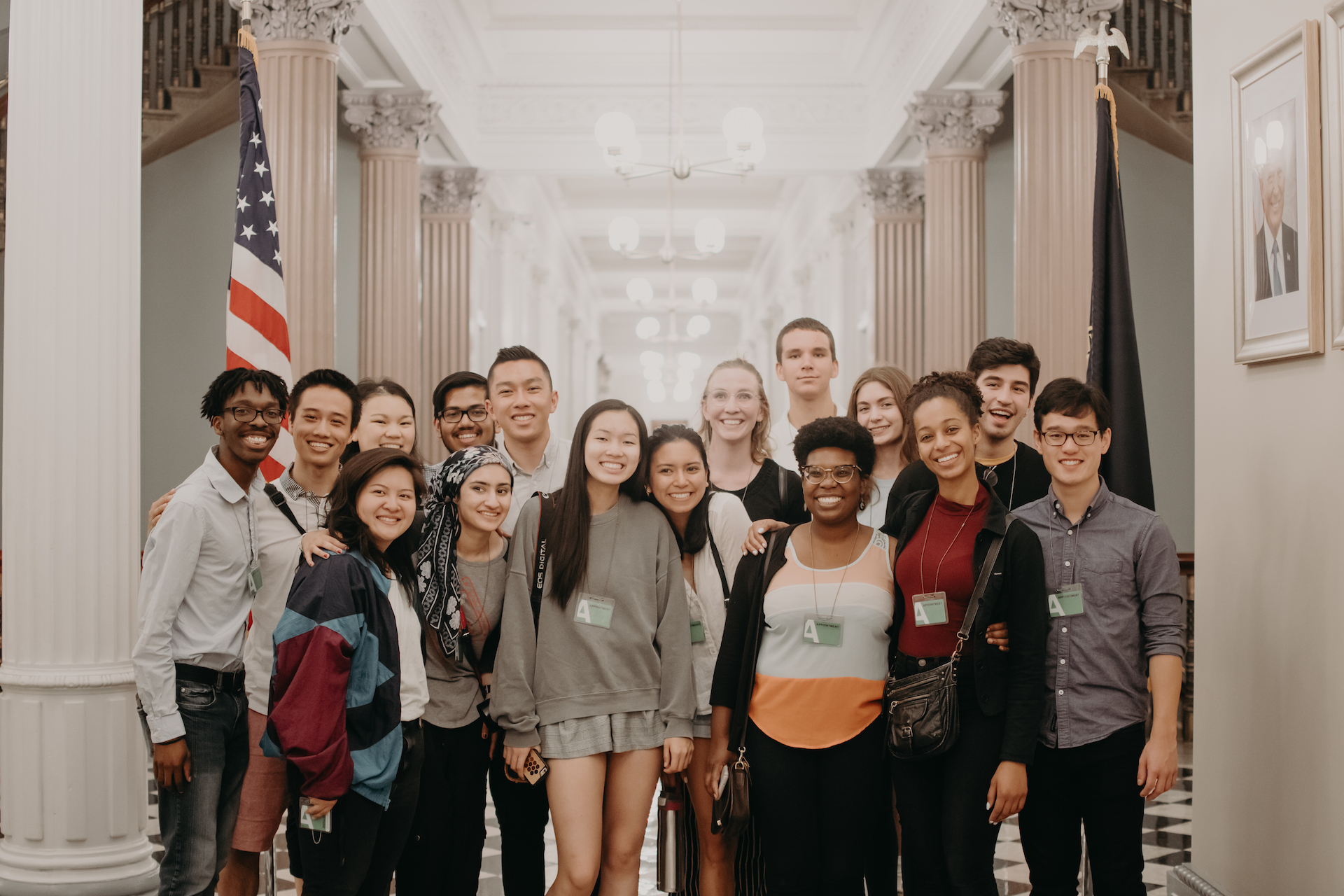
These long-term effects have proved one of our core hypotheses—that engaging young people early in their careers can have an outsized impact on their academic and career journeys compared to a similar opportunity later in life. And when people under 30 represent only 3% of the federal tech workforce, programs like the Civic Digital Fellowship that inspire young people to join government are more critical than ever.
One of the most significant challenges Coding it Forward has faced in the past four years has been how to serve all interested young people who apply to the Civic Digital Fellowship. Historically we’ve had upwards of 1,000 applicants each cycle—with demand only increasing—but have only been able to place between five and ten percent due to the logistical challenges of expanding our fellowship model across the federal government. That said, this challenge inspired us to look for other opportunities and avenues to serve more people in the Coding it Forward community.
Beyond the Civic Digital Fellowship, our team has granted over $200,000 through the First Act Fund to over two dozen early-stage social entrepreneurs building their own solutions with technology addressing problems ranging from criminal justice to public health; piloted a new, year-long fellowship model for recent graduates to work at social impact organizations; and continued to invest in our mailing list (which has grown to over 7,000 subscribers) with biweekly Job Drops that highlight internship and entry-level social impact tech positions and resources.
And most recently, our team announced that we were recruiting for our newest program, the Civic Innovation Corps—a sister program to the Civic Digital Fellowship that will place several dozen more mission-driven young technologists in government, but at the state and local levels. The Civic Innovation Corps is a recognition that there is critical technology work being done in the public sector beyond the federal government and that change often comes from the ground up.
In building viable entry points and pathways into civic tech and fostering a community of similarly mission-driven young people, Coding it Forward demonstrated the extent to which existing opportunities and structures were failing to serve this key group. Meaningfully, the interest and response we received was a visible sign to institutional actors—colleges, universities, philanthropies, and governments at all levels—that there was (and continues to be) more of a role they can play to uplift the next generation.
A 2019 op-ed by presidents of three leading foundations—Ford, Hewlett, and New America—mentioned Coding it Forward and the overwhelming demand for Civic Digital Fellowship positions as one reason for their significant, multi-million dollar investment in establishing the Public Interest Technology University Network (PIT-UN). Other organizations have also risen to the occasion to meet demand for entry-level civic tech opportunities, including Nava PBC and Code for America’s apprenticeship programs, after Coding it Forward Fellows disproved the notion that young people are unable to have a meaningful impact with their skills in a short period of time.
In just over four years, Coding it Forward has helped catalyze a groundswell of change. Instead of facing stigma or the uncertainty of not knowing whether their computer science classmates care similarly about the intersection of technology and social impact, technology students today can join vibrant communities and on-campus student organizations like Hack4Impact and Design for America, take classes from professors supported by PIT-UN, and find more internship and job opportunities than ever from Coding it Forward and others.
Social impact and civic tech sets itself apart with its focus on serving everyone and not just a subset of paying customers, which is why it continues to be crucially important to our team that, in paving the way forward for many thousands of mission-driven young technologists through all of our programs, we do so with a rock-solid commitment to diversity, equity, and inclusion. From our start in 2017, we knew we could fill our first Fellowship cohorts many times over with students who looked like us and came from schools like ours, but it was important to us that the opportunities that we were pioneering were available to the widest possible swath of young people. Each of our Civic Digital Fellowship cohorts to date has been majority female, with strong representation across race, ethnicity, geography, socioeconomic status, and academic institutions.

Three years ago, I gave a talk at Code for America Summit that ended with a call to action—that “there’s too much at stake to stay on the sidelines.” It was true then, and it remains true today.
In 2021, we are facing an ever-present and pandemic-exacerbated digital divide that has revealed the centrality of technology in delivering key social safety net assistance in a time of public health and economic crises. News reports of unemployment insurance websites failing to handle the load of new claimants and the inefficiency and un-intuitiveness of vaccine registration processes are the latest front-page reminders that policy is impotent without implementation—and that a focus on technology and delivery is central to government working for all Americans in our digital world.
Given this context, the technologist Dr. Nicol Turner Lee, Director of the Brookings Institution’s Center for Technology Innovation, has remarked that we need a “Tech New Deal” and a renewed call to national service that includes young technologists—the 21st century, tech-focused version of President Franklin Delano Roosevelt’s New Deal Civilian Conservation Corps and Works Progress Administration. Four years ago, there were no voices in the civic tech community that spoke for young people, but Coding it Forward’s successes have resulted in policymakers recognizing that the next generation of digital leaders plays a critical piece in addressing our nation’s technical needs. In a recent podcast episode, Dr. Turner Lee pointed specifically to Coding it Forward as a leading model that the Biden-Harris administration might use to inspire young technologists to public service.
Coding it Forward’s work and growth these past four years would not have been possible without the support of countless individuals and organizations, including Fellowship partners, philanthropic funders, and other mission-aligned organizations. I will miss working closely alongside them. As this chapter closes for me, I am deeply grateful for the advisors, friends, and family who have encouraged and empowered me to pursue this unorthodox path—especially as someone without the technical skills that characterize the community Coding it Forward strives to serve.
To me, Coding it Forward has always been more than a job. It has brought me a mission, a community, and the opportunity to help build the ecosystem, support structures, and resources I would have loved when I started college.
I am seriously optimistic about the future—our future—knowing that this generation of technologists is inspired and fired up to create tangible impact in government, nonprofits, and other social impact sectors.
At its roots, I have always seen Coding it Forward’s work as aspirational. Our work as an organization and a broader civic tech movement will have won a victory when using tech, data, and design skills in service of the public interest is considered the gold standard—the “dream job”—and perhaps even an expectation. But our work will not be done until there are enough opportunities inside and outside of government to meet and truly take advantage of this growing supply of mission-driven talent.
That work is not done, and I am eager to keep going.
Always forward,
Chris